One Drone Flight, Two Formats: Horizontal and Vertical Video
Listen to this article6:06
Media7 shoots drone footage once in high resolution and edits both 16:9 and 9:16 versions from the same flight. Benefits, planning and honest limits.
Short answer
Yes, one drone flight can deliver both horizontal and vertical video. Media7 shoots drone footage once in high resolution (4K, 5K or 8K depending on the drone and the project) and then edits 16:9 and 9:16 versions from the same material. That way a single shoot day gives you wide footage for YouTube, your website and presentations, plus vertical video for Reels, TikTok and Shorts.
One flight, two formats: what it means
Horizontal 16:9 is the standard for YouTube, websites, TV screens and presentations. Vertical 9:16 is made for phone screens: Instagram Reels, TikTok, YouTube Shorts and stories.
In the past, the two formats often meant two separate shoots. Today the footage can be captured in high resolution and cut into two different frames in the edit. The drone flies once, and the result is delivered in both formats.
Why this approach makes sense
One flight, one budget: no second shoot day, no second crew call-out and no extra logistics.
A consistent look: your website, YouTube channel and social media show the same light, the same grade and the same shots.
Permits and flight time are used once: the agreed flight window covers both formats.
Faster delivery: colour grading is done once, and both versions are edited in parallel.
Less weather risk: drone work depends on wind and rain, and planning one flight day is easier than planning two.
Which projects it suits
This approach is especially useful when the same video will run on a website and YouTube as well as on social media: residential complexes and real estate, hotels and resorts, construction projects, outdoor events, tourism and city films, brand and corporate videos.
For a residential complex, for example, the horizontal version plays on the website and the sales-office screen, while the vertical version runs in Instagram and TikTok ads. Because both come from the same flight, the campaign looks consistent across every channel.
How the shoot is planned
Both formats are considered from the start, because the vertical version is cut from the centre of the horizontal frame. A few rules guide the plan.
Centre-weighted composition: the main subject — a building, a road, a coastline or people — stays in the middle of the frame so it remains complete in the 9:16 crop.
Headroom at the top and bottom: the vertical frame needs space for a title, a logo and subtitles.
High-resolution capture: a 1080x1920 vertical crop taken from a 4K, 5K or 8K source stays sharp.
Moves that work in both formats: top-down shots, orbits around the subject, reveals and vertical pedestal moves up or down.
Grading and editing: done once, used twice
Colour grading is applied to all the footage once, and then two separate edits are built. The horizontal version gives more room to wide shots, while the vertical version has a faster rhythm and follows the movement inside the frame.
Text, logos and subtitles are placed separately for each format. In vertical video, the platform's own buttons and captions cover the bottom and right side of the screen, so important text is kept inside the safe area.
Delivery formats
Horizontal: 1920x1080 (Full HD) or 3840x2160 (4K) for YouTube, websites, TV and presentations.
Vertical: 1080x1920 for Instagram Reels, TikTok, YouTube Shorts and stories.
If needed, shorter 15- or 30-second cut-downs can be made from the same material; this is agreed in the brief.
Limits: when a dedicated vertical shot is needed
A vertical crop uses only part of the horizontal frame. With very wide landscapes — a long coastline, a city panorama, a large industrial site — the 9:16 crop can lose the sense of scale.
In those cases, dedicated moves are planned for the vertical format: for example, a vertical rise that shows the height of a building, or flying the camera from a different angle. On some projects, a separate vertical pass gives a better result. Media7 decides this for each project in the brief.
Permits and flight coordination
Drone flights in Azerbaijan require permission and coordination with the relevant authorities. Media7, a Baku production company since 2003, takes care of flight planning: checking the location, agreeing the flight time and suggesting a backup date in case of bad weather. Getting two formats from one flight also simplifies this process, because the agreed flight time is used only once.
Example: Baku from the air
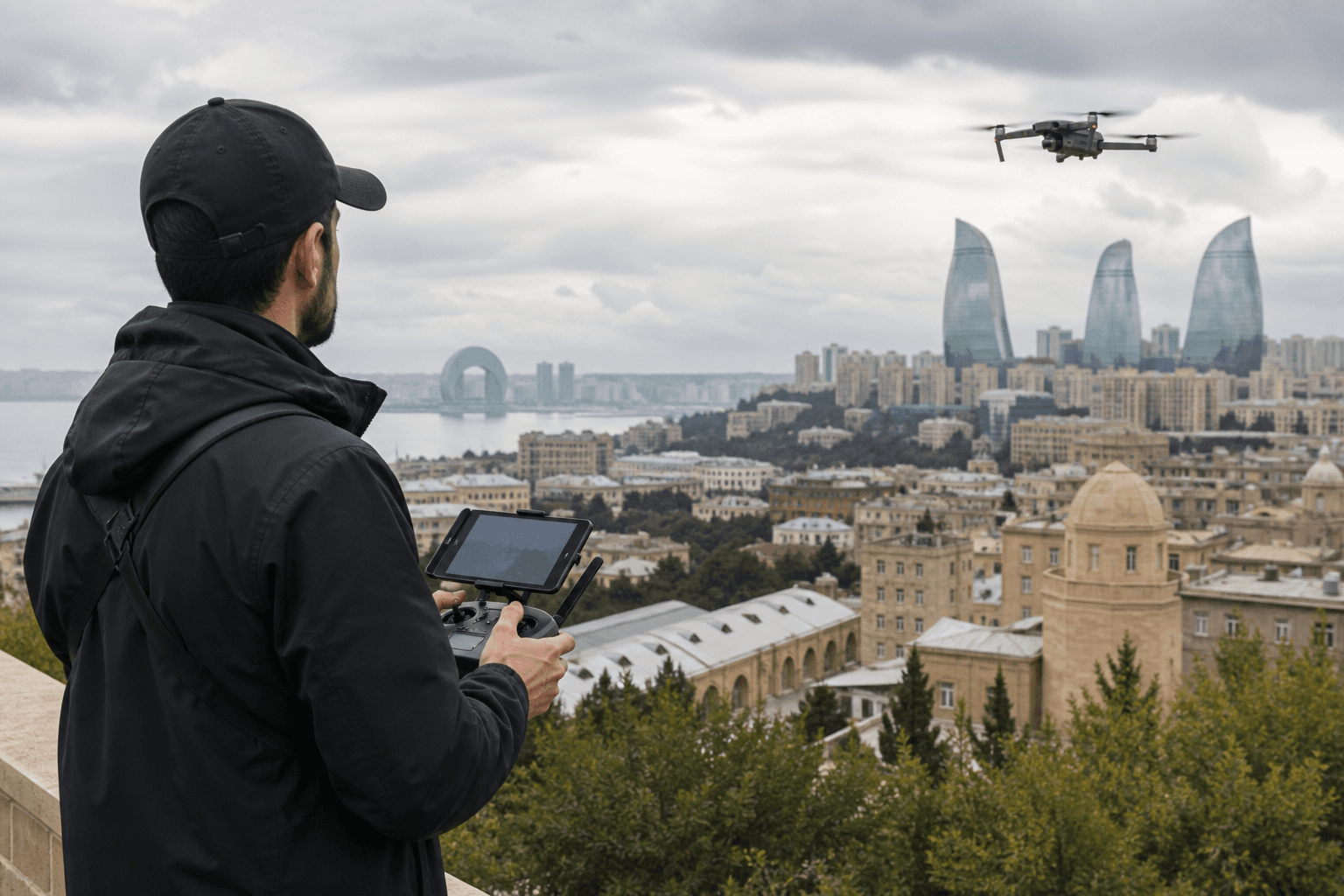
Media7 filmed a short aerial film of Baku for the Ministry of Economy of the Republic of Azerbaijan, with drone shots of the modern skyline, highways and high-rise buildings. You can watch it on the Baku drone filming project page.
A short pre-shoot checklist
Decide where the video will be published: website, YouTube, Reels, TikTok, Shorts or TV.
Write down the length you need for each format.
Share the exact address or a map pin.
List the main subject and the must-have shots.
Tell us in advance whether you need a logo, titles or subtitles.
Agree on a backup date in case of bad weather.
How the price is calculated
At Media7, aerial / drone photography starts from 500 AZN, and adding drone filming to a video project costs +500 AZN. Delivery of horizontal and vertical versions is planned in the brief; the final price depends on the scope and is calculated in the price calculator or when you contact us. More about the service: drone filming.