AI Backgrounds in Product Photography: Real Studio and Colour Match
Listen to this article4:53
Media7 shoots the product in a real studio, builds the background with AI and matches colour. The hybrid approach gives clean, controlled results for e-commerce and ads.
Hybrid product photo: short answer
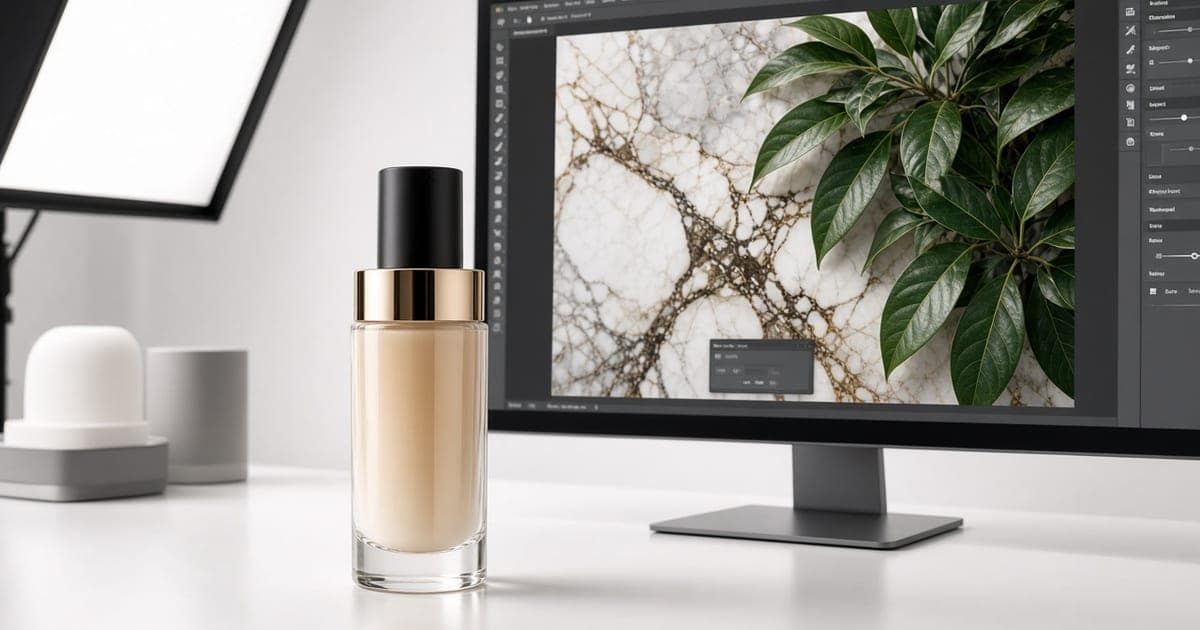
Media7 shoots the product in a real studio with professional light, then builds the background with AI and matches colour. The product itself stays real: texture, label, reflections and shadow. The background can change by campaign — stone, marble, city, nature or a minimal brand field. This hybrid model gives both speed and control for e-commerce catalogues and ad banners.
Why the product is shot for real
Fully AI products sometimes warp labels, misread materials or break proportions. That risk is not acceptable in ads and e-commerce. Real studio capture keeps accurate colour and shape. In the photography stage Media7 chooses a neutral or simple background so cut-out and masking stay clean. Without a clean mask, an AI background composite looks stuck on.
How the AI background is built
A campaign-ready background is generated under the masked product. Prompts align perspective, light direction and depth of field with the product frame. If the product is lit from the left, the background keeps a left-side key. Perspective mismatch is the fastest way to make a frame feel fake; Media7 therefore prepares several background options and picks the best fit. Goal, audience, must-have shots and delivery format should stay written in the brief. Media7 confirms these fields with the client before the shoot so set and edit share one reference.
Colour match and shadow
When an AI background meets a real product, colour temperature and contrast must be matched. In grading Media7 treats the product’s real colour as the source of truth and pulls the background toward it — not the other way around. Contact shadow and soft ambient shadow are added so the product does not float. Without this step a hybrid frame does not meet professional ad standards. Technical spares — batteries, cards, filters and an offline copy — prevent stalls on field projects. The crew checks media during the day and passes status in a short written note.
Which projects it suits
E-commerce cards, marketplace galleries, social ads, outdoor banners, catalogues and seasonal campaigns. From one product shoot you can derive several seasonal backgrounds: summer, winter, holiday. That can be faster and cheaper than rebuilding a full set for every campaign. If a brand kit exists, the AI background palette is locked to it. Final delivery happens only after an internal review: does the message match the brief, are audio and colour stable, are subtitles and CTA clear. Revision rounds are agreed in advance too.
Limits and honest expectations
Glass, metal and highly reflective surfaces make masking and reflection control harder. For some products a simple real background still looks cleaner. Media7 states this in the brief. Legal limits also apply: product claims in the photo must not be altered. AI is for background and atmosphere, not for “improving” product features.
Delivery and versions
Delivery usually includes a cut-out PNG or TIFF of the product, a final composite JPEG/PNG, and sometimes square and story formats. Colour profile and size are agreed in the brief. Revision rounds are written down in advance. For estimates and briefing, the price calculator or contact page is enough.
Practical checklist
For mahsul-foto-cekilisinde-ai-background-reklam, the Media7 team prepares a written agreement before the shoot: goal, must-have shots, no-go zones, delivery format and a backup date. The list is filled with the client and used as the reference document on shoot day. Even small changes are written down early so time is not lost on set. Final delivery criteria are recorded in the same document.
Frequently asked questions
Can AI and classic filming work together. Yes, Media7 often runs a hybrid model: real footage is the base, while AI speeds pre-viz, backgrounds or editing. Final quality always passes a human review. Another question: how long the process takes. It depends on brief clarity; with a clear brief a draft can take hours, with a weak brief it can stretch into days.
Next step
To start a project, send the brief, references and the formats you need. Media7 prepares a written proposal and plans the shoot or AI stage. Use the site calculator and contact form for services and estimates. The team manages the process with Baku production experience and sends a written update at each stage.