
Light, styling and colour accuracy in food photography
Listen to this article2:34
For menus, delivery and ads, a food photo depends on light direction, styling and whether the colour still matches the real dish.
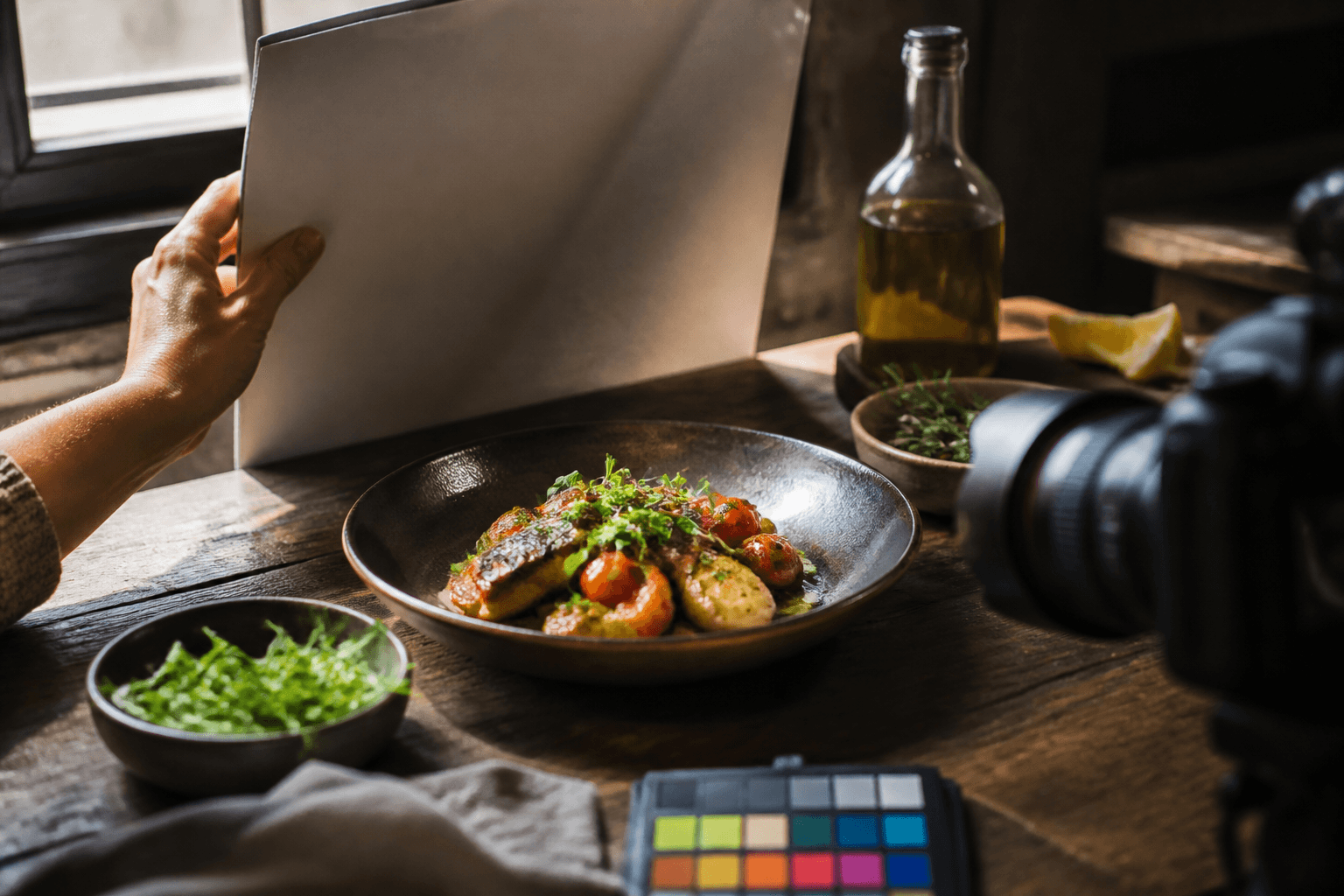
A food photo sells expectation, not flavour
For a restaurant, café or delivery brand the picture is half the menu. When there is no smell, colour, texture and light make the decision. Bad light turns a dish grey; clumsy styling makes it look fake. Before the shoot agree three things: light direction, the story on the plate and how close the colour stays to the real food.
Light should arrive from the side
A flash from the front flattens soup into a diagram. Side or back-side light shows steam, the sheen of oil and the edge of a herb. Window light is often the cleanest option; midday sun throws a hard shadow and burns greens. A diffuser and a small white card cover most restaurant tables.
Match the angle to the dish
Pizza, pies and composed plates read from directly above. A burger, a drink or a tall dessert sits better at 45 degrees or eye level because the layers show. Shooting every dish from every angle wastes the hour; one hero angle and one detail is enough.
Styling works by leaving things out
If the table is crowded, the food shrinks. One piece of bread, a spoon, a fold of cloth will fill the frame without competing. Steam, a cut slice and a clean rim make the dish look alive. Plastic shine and extra grease read as cheap advertising.
Colour sets the taste the guest expects
If a sauce looks deep red on screen and brown in the bowl, complaints rise. A colour target, a calibrated display and a check against the live plate cut that risk. Greens should not drift yellow; meat should stay a natural red-brown, not grey-pink.
Menu, delivery and ads are not the same frame
A menu frame must stay readable at a small size. Delivery pictures should show the packaging, or the guest expects something else. An ad frame makes one dish the hero: closer, less furniture. All three can be shot in the same light with different crops, and they fit in one day.
How to work with the kitchen
Food should come in waves, not all at once. A plate has three to six minutes on set, then the next one arrives. When chef and photographer share one list, sauces do not skin over and the crew does not wait. Media7 can pair food stills with short Reels frames on the same day, so one styling pass feeds both the menu and social.