
Building an SKU and angle list for a product photo shoot
Listen to this article3:27
A catalogue shoot starts with a spreadsheet, not a camera: SKU list, base angle set, detail frames, sample prep and a realistic daily rate.
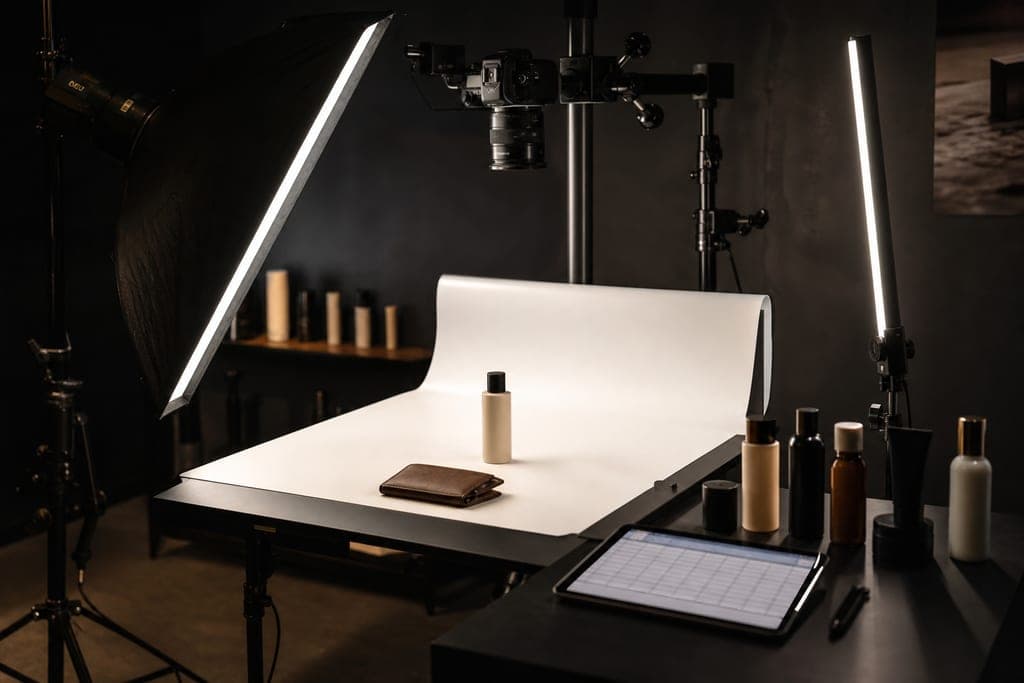
A catalogue shoot starts with a spreadsheet
The most expensive mistake in product photography is thinking on the shoot day. The studio is built, the lighting is set, the crew is waiting, and that is when people start debating how many angles each product needs. A one-page SKU and angle list removes the problem entirely and makes the budget predictable.
How to build the SKU list
A simple table is enough: SKU code, product name, category, colour and size variants, priority, special notes. The priority column matters most, because if the day runs long you already know what must be shot. Five colourways are five separate SKUs, and the shooting time counts five times.
The base angle set
In most categories four frames form the spine: front, three-quarter, side and back. Add one detail frame and one in-use frame and the product page feels complete. Keep this set identical across the catalogue; consistent angles are what make a catalogue look professional.
Extra angles by category
Apparel adds a mannequin or model frame, fabric texture and a stitching detail. Electronics need ports, buttons and the screen. Food needs the packaging label and the product opened. Cosmetics need the cap open, the texture itself and careful control of reflections on glossy surfaces. Jewellery without a scale frame almost guarantees a size misunderstanding.
Detail and scale frames
A large share of returns comes from wrong expectations about size. One frame showing the product beside a familiar object or in a hand cuts that risk noticeably. The detail frame proves quality: the seam, the material, the button, the label. Together these two frames often influence a sale more than the written description.
Preparing the samples
Whatever arrives on set should look like the product that ships. Dust, fingerprints, dented packaging and outdated labels all cost retouching time. Clothes need pressing, shoes need cleaning, and boxes should arrive with a spare. A backup sample is the single most useful thing to bring, because a damaged item then does not stop the day.
The flow of the shooting day
Group products by category and lighting scheme so the setup is not rebuilt for every item. One group is photographed while the next is prepared. File naming is tied to the SKU code on the day itself: code, angle, variant. That rule saves hours when the images are uploaded to the store.
How many frames fit in one day
For simple, similar products, 40 to 60 SKUs in the base set is realistic in a day. Where styling, a model or many detail shots are involved, that drops to 10 to 15 SKUs. Knowing the difference in advance stops you starting a day with a list that was never going to fit.
What the list buys you
An accurate quote, a predictable day, a consistent catalogue and an archive that is easy to extend. New products are shot against the same angle list and the same lighting scheme, so the catalogue stays coherent. Media7 can combine product photography with short product videos on the same day, so one setup delivers both e-commerce frames and social content.