
What is product photography and how to plan it for e-commerce
Listen to this article1:57
How to plan product photography for catalogues, marketplaces and ads: SKUs, angles, lighting and retouching.
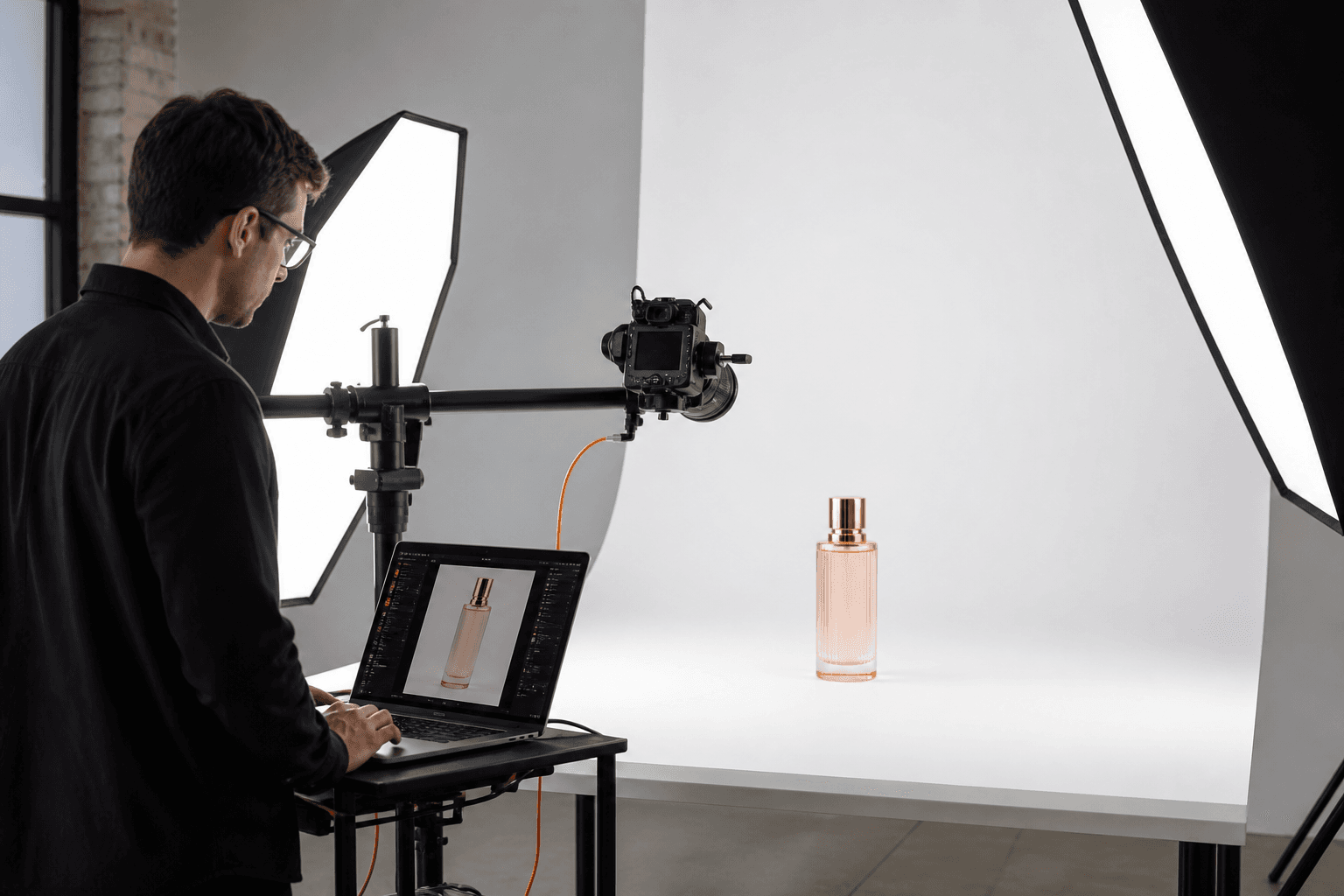
What product photography is for
Product photography has to make an object feel trustworthy on a screen. If colour, material, scale and detail are wrong, returns go up. That is why e-commerce photography is sales material, not a mood board.
Start with the SKU list
Do not begin by emptying boxes onto a table. Write the required angles for each SKU: front, 45 degrees, back, detail, scale in hand, and pack shot. Marketplaces often want a white background and a square crop. The brand site may also need lifestyle frames. Those two jobs can share a day, but not the same setup.
Light should not rewrite the product
On white, light needs to be even and shadows soft. Glass, metal and cosmetics bounce light, so polarisers and a separate accent may be required. Food and textiles are unforgiving on colour. Media7 uses a colour reference and a calibrated screen so yesterday’s red does not become today’s orange.
Lifestyle and campaign frames
After the pack shots, the product can sit in a real environment: a table, hands, an interior. Those frames work for ads, Reels covers and website heroes. Lifestyle does not replace the catalogue. Catalogue builds trust; lifestyle builds desire.
Where retouching stops
Dust, lint and tiny scratches can go. Shape, printed type and true colour cannot. The customer has to open the same object. That is both an ethical and a marketplace rule.
How files should be delivered
Name files by SKU and export separate web and print sizes. After twenty products, a folder of IMG_2391 files helps nobody. Media7 can add a short product video on the same day, because the lighting and composition are already built.